

Key takeaways
- Use Google Ads when you need leads within weeks, are testing a new service or area, or face searches where ads dominate the page.
- Use SEO for the core services you will sell for years, because organic visibility compounds while ad clicks have to be bought again every time.
- Set the split from your target cost per lead and the value of a customer, not from a rule of thumb.
- Track forms, calls and WhatsApp clicks first, or you cannot compare the two channels at all.
- Review the split every quarter and move budget toward whichever channel produces leads more cheaply at the margin.
Part of our guide: Technical SEO checklist for service businesses
What is the real difference between Google Ads and SEO?
Google Ads is paid placement: you bid in an auction to appear in the sponsored results for chosen searches and pay when someone clicks. SEO is the work of earning the unpaid, organic results, through a sound website, useful pages and a reputation others link to and mention. Both target the same searcher, often on the same results page.
They do not influence each other's rankings. Google's guide to how Search works (opens in a new tab) states plainly that it does not accept payment to crawl a site more often or rank it higher. Spending on ads will not lift your organic positions, and cutting ads will not hurt them.
The practical differences are speed, control and what you own at the end. Ads can produce clicks the day a campaign is approved, and you control the message, the landing page and the budget. SEO usually takes months to move, and you control far less of the result, but the pages and authority you build remain yours when spending slows.
| Criterion | Google Ads | SEO |
|---|---|---|
| Time to first leads | Days to weeks | Usually several months |
| What you pay for | Each click, plus management | Content, technical work, links |
| When spending stops | Leads stop almost at once | Visibility fades slowly |
| Control over position | High, through bids and quality | Low; earned over time |
| Best for | Urgent demand, tests, new areas | Core services, long-term cost |
| Main risk | Wasted spend on poor targeting | Slow progress, unclear payback |
When does Google Ads make more sense than SEO?
Google Ads wins when you need leads quickly, when the search is urgent, or when you want to test demand before investing in content. Emergency services such as locksmiths, boiler repair or IT outage support fit well: the buyer calls the first credible result they see, and the top of that page is often ads.
Ads also suit new businesses with no organic visibility yet, launches of a new service or city, seasonal offers and high-value services where one extra client covers months of spend. They give you clean data fast: which keywords convert, which messages get calls and what a lead actually costs. That data then tells your SEO plan which pages deserve the most effort.
The cost is that ads rent attention. Click prices are set by competition in an auction, so in crowded markets such as legal, finance or home services they can be high, and the bill starts again every month. Ad quality helps: Google's Quality Score (opens in a new tab) diagnostic rates expected clickthrough rate, ad relevance and landing page experience from 1 to 10, and better relevance generally means paying less for the same position.
When does SEO pay off better than ads?
SEO pays off for the services you will sell for years, in markets where buyers research before they contact anyone. Accountants, software companies, consultants, clinics and B2B suppliers all fit this pattern: the buyer reads several pages, compares, and returns later, often through organic results.
The economics come from compounding. A service page that ranks well keeps bringing visitors without a charge per click, and each improvement to the site, such as faster templates, clearer service pages or stronger reviews, raises the whole site. Organic results also earn trust with searchers who prefer to skip sponsored listings, and AI Overviews link to organic pages rather than ads.
The trade-off is time and uncertainty. Google itself warns, in its guide on whether you need an SEO, that no one can promise a number one ranking on Google, and in competitive markets steady movement often takes many months. Start with the foundations in our technical SEO checklist for service businesses, because content and links work poorly on a site Google struggles to crawl.
Google Ads vs SEO: which fits your situation?
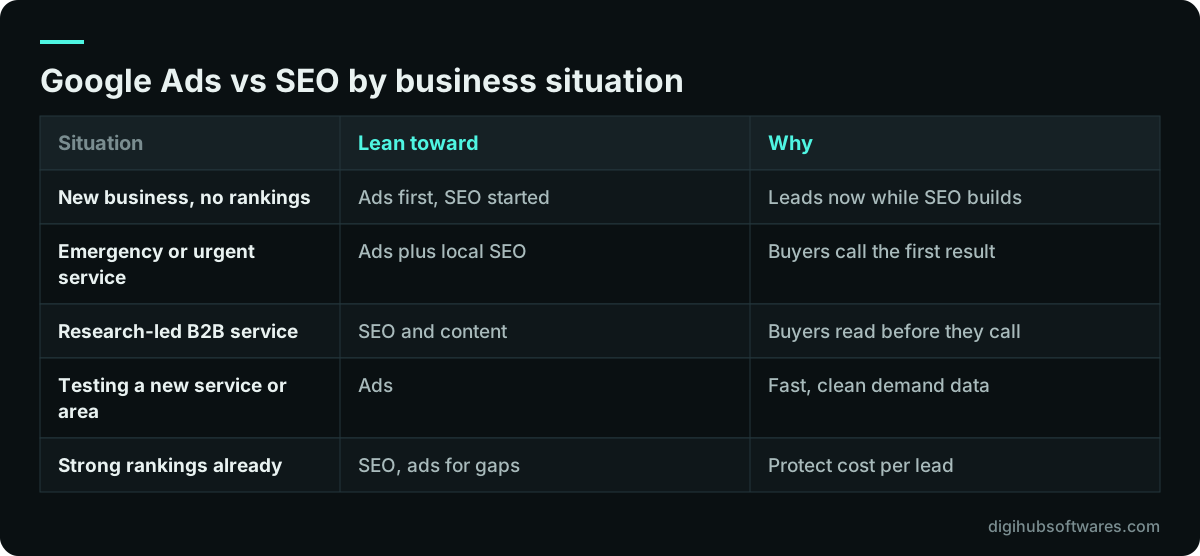
The right answer in the Google Ads vs SEO choice depends on how urgent your need for leads is, how competitive the search results are and how long you will sell the service. The figure below shows the usual lean for common situations; most businesses end up using both in different proportions.
How should you split a budget between Google Ads and SEO?
Split the budget from the numbers you already know: what a customer is worth, what you can afford to pay for a lead, and how soon you need results. Avoid fixed rules of thumb, which ignore your margins and your market.
Work it through in steps. First, estimate the value of a customer over the first year and the share of leads that become customers; together they give the most you can pay per lead. Second, run ads on your best-converting services and measure the real cost per lead. Third, fund SEO at a level you can keep up for at least six months, because stopping after two wastes most of the effort. Fourth, review each quarter.
A simple illustration shows the logic. Suppose a client is worth 2,000 in your currency in the first year and one lead in four becomes a client: a lead is worth about 500 to you, and you might accept paying 150 for one. If ads deliver leads at 120, keep funding them and consider raising the budget. If they cost 300, fix targeting and landing pages, and move some budget into SEO for that service. These figures are made up for the example; use your own.
- Need leads this month and have no rankings: weight the budget toward ads, with a smaller, steady SEO budget.
- Ranking on page one for some services: keep ads for the services and areas where you do not rank yet.
- Ranking well for your core services: reduce ads on those terms, test whether leads hold, and keep brand campaigns only if competitors bid on your name.
- Very small budget: start with your Google Business Profile, service pages and conversion tracking before paying for clicks.
How do you compare the two channels fairly?
The fair Google Ads vs SEO test compares cost per qualified lead and cost per customer, not clicks or rankings. That requires the same tracking for both channels: forms, calls and WhatsApp clicks measured as key events in GA4, and the main lead actions as conversions in Google Ads.
Most service businesses undercount leads because calls and chats go untracked, which makes ads look worse than they are and SEO impossible to value. Our guide on how to track form, call and WhatsApp conversions sets this up, including Consent Mode v2. Then add a how did you hear about us field and log the answer in your CRM, because buyers often see an ad, search again later and convert through an organic result.
For SEO, include the full cost: content, technical fixes, link building and the time your team spends reviewing drafts. For ads, include management fees and landing page work as well as the media spend. Only then is the comparison honest.
How do Google Ads and SEO work better together?
They share landing pages, keywords and data, so running both well costs less than running each alone badly. Search terms that convert in ads show which topics deserve a strong service page. Pages that rank organically show which messages earn clicks, which you can test in ad copy.
Good landing pages lift both channels at once. A fast, clear service page with an answer-first structure scores better on landing page experience in Google Ads and is more likely to rank and be cited in AI answers. Our guide to structuring service pages for AI search covers that page structure, and local businesses should keep their Google Business Profile checklist in shape, because the map results sit between the ads and the organic links.
What does each channel cost, and when should you get help?
Ad spend depends on click prices in your market and the volume you want, and it is paid directly to Google. Management fees and SEO fees depend on scope. On our digital marketing pricing page, ads management starts at $249 a month for one platform with monthly spend up to $2,000, and the Local SEO package starts at $299 a month, with a three-month minimum. Ad spend stays in your own account and is not marked up.
Get help when spend is rising without a matching rise in leads, when you cannot tell which channel produced which customers, or when you want a plan that moves budget between the two as results come in. Our Google Ads management service runs campaigns on primary goals that reflect real leads, and our SEO strategy consulting sets the organic plan and the review points for shifting the split.
Sources and further reading
Official documentation and guidance if you want to read more about this topic.
Related guides and services
Questions readers ask
Is SEO better than Google Ads for a small business?
Neither is better in every case. SEO usually gives a lower cost per lead over the long run for core services, while Google Ads brings leads within days and suits urgent needs, tests and new areas. Many small businesses start with modest ads for immediate leads alongside steady SEO, then shift budget as organic rankings arrive.
Does running Google Ads improve organic rankings?
No. Google states that it does not accept payment to rank a site higher or crawl it more often, and ads spend is not a ranking signal. Ads can help indirectly by showing which keywords and messages convert, which you can use to improve service pages, but the organic results are earned separately.
How long does SEO take compared with Google Ads?
Google Ads can show your ads as soon as the campaign is approved, so the first clicks often come within days. SEO usually takes several months to show steady gains, and longer in competitive markets or on a new domain. Plan SEO budgets for at least six months before judging the results, and measure leads, not only rankings.
Should I stop Google Ads once I rank first organically?
Test it rather than assume. Pause ads on terms where you rank at the top for a few weeks and watch total leads from that service. If leads hold, keep the savings. If they drop, competitors may be taking the top of the page, and running ads on those terms is worth the cost.
What is a good monthly budget for Google Ads and SEO?
A good budget is one that buys enough clicks to produce meaningful data within a month or two and funds SEO steadily for at least six months. Work backward from what you can pay per lead and how many leads you need. Very small ad budgets spread over many keywords rarely produce enough data to optimize.